

















Mine Water Management and Hydrogeology for African Mines
Water can shape the cost, timing, and risk profile of a mine long before production starts. For African mining projects, the challenge is rarely one issue. A site may face groundwater inflows, seasonal flooding, water scarcity, treatment needs, power constraints, and stricter reporting expectations at the same time.
That makes hydrogeology a planning issue, not a late-stage operational fix. Mines need to understand how groundwater moves through the site, how much water may need to be pumped or stored, and how water systems will perform across feasibility, operations, and closure.
Key Takeaways
- Mine water risk affects production, safety, compliance, and cost control.
- Deeper mines need stronger groundwater models, dewatering plans, and monitoring.
- Climate pressure is changing rainfall, flood, and water-supply assumptions.
- Pumping and treatment systems need reliable power and maintenance planning.
- Early hydrogeological work gives teams better data for feasibility, funding, and operations.
Why Mine Water Risk Needs Earlier Attention
Mining changes how water moves through rock, soil, pits, underground workings, waste facilities, and surrounding catchments. If a project team waits until water becomes visible on site, it may already face delays, emergency pumping costs, or design changes.
The IFC Environmental, Health, and Safety Guidelines for Mining call for mining activities to monitor and manage water use, treat effluent streams, and account for stormwater runoff. In practice, that means water planning should sit alongside geology, mine design, infrastructure, and environmental studies from the start.
For early-stage projects, water work should begin during mineral exploration and move into feasibility with better site data. That helps teams identify aquifers, estimate inflows, assess water quality, and plan dewatering before mine design becomes too fixed.
What Changes As Mines Get Deeper
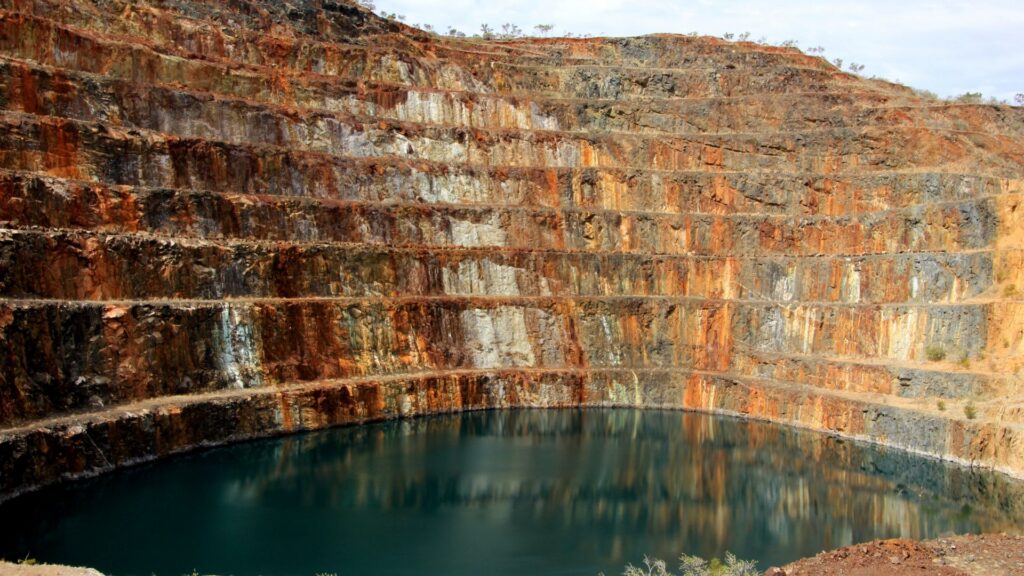
As mines deepen, water risk becomes harder to manage with basic pumping alone. Groundwater pressure can rise. Flow paths can change as mining opens new pathways through fractured rock. Underground workings may need staged dewatering, backup capacity, treatment ponds, and safe access plans.
Kamoa Copper’s Kakula Mine shows the scale this can reach. Its dewatering update reported five high-capacity pumps ordered for Stage Two dewatering, each rated at 650 litres per second. That is about 3,250 litres per second of planned pumping capacity for one dewatering stage at one large operation.
Most projects won’t operate at that scale, but the lesson applies widely: mine water systems need to be designed for site conditions, not generic assumptions. Pump size, sump layout, pipeline capacity, settling ponds, treatment systems, and power supply all need to match the hydrogeological model.
This is where geological modelling and groundwater modelling need to work together. A mine plan based on orebody geometry alone can miss water pathways that affect access, production rates, slope stability, and closure planning.
Climate Pressure is Changing Design Assumptions
Mine water plans can’t rely only on historic rainfall patterns. The IPCC’s Africa assessment projects that the frequency and intensity of heavy precipitation will rise across most of Africa, apart from northern and southwestern Africa.
For mines, heavier rainfall can place pressure on diversion channels, pit sumps, tailings facilities, haul roads, and treatment systems. At the same time, many sites still face seasonal or long-term water scarcity, especially where mines compete with communities, agriculture, and ecosystems for limited water.
A useful water plan needs to deal with both sides of the problem: too much water in the wrong place, and too little reliable water for processing, dust suppression, and site use.
What A Stronger Mine Water Plan Should Include
A practical water strategy should give mine teams a clear picture of risk, capacity, and response options. That includes:
- Hydrogeological assessment: Map aquifers, fractures, recharge zones, and likely inflow points.
- Water balance modelling: Track water inputs, losses, storage, reuse, discharge, and treatment needs.
- Dewatering design: Match pumps, pipelines, sumps, backup systems, and settling capacity to site risk.
- Water quality planning: Test for metals, acidity, salinity, suspended solids, and treatment needs.
- Monitoring systems: Use water levels, flow data, rainfall data, and pump performance to guide decisions.
- Closure planning: Plan for long-term groundwater recovery, discharge risk, and post-mining water quality.
These steps support mining geology services by giving technical teams better inputs for resource planning, mine design, and reporting. They also help investors and project partners test the assumptions behind a project during technical due diligence.
Digital Monitoring Improves Response Time
Digital tools can’t replace site knowledge, but they can help teams see changes earlier. Sensors can track groundwater levels, flow rates, pump status, rainfall, and water quality. When teams connect that data to a water balance model, they can respond before a small issue becomes a production stop.
Predictive maintenance can help too. Pump vibration, temperature, flow, and pressure data can point to failure risks before equipment stops. For remote African operations, this matters. Spare parts, specialist support, and replacement pumps can take time to reach site.
The goal isn’t more data for its own sake. The goal is better decisions: when to pump, where to store water, what to treat, what to reuse, and when to update the mine plan.
Water Stewardship and Compliance Expectations
Water management affects more than the mine fence line. Discharge, abstraction, seepage, and aquifer impacts can affect surrounding users and ecosystems. The ICMM Water Stewardship Maturity Framework gives mining companies a practical way to assess how they manage shared water resources.
For African mines, this means technical water planning should connect to environmental, social, and governance (ESG) commitments in a practical way. Teams need clear accountabilities, reliable monitoring, transparent reporting, and plans that reflect local water users and catchment conditions.
MINROM supports mine water planning across assessment, dewatering, modelling, monitoring, and closure.
Contact MINROM to discuss hydrogeological assessment, groundwater modelling, mine dewatering, or water-risk review for your project.