










INDEPENDENT TECHNICAL ADVISORY

Mineral Resource Consulting for Mining Projects in Africa and Other Developing Countries

Complete the form to book a free discovery call.

Minrom helps international mining companies, investors, and transaction teams turn project data into defensible resource models, due diligence findings, and technical reporting inputs for high-stakes decisions.

From exploration data and quality assurance and quality control (QA/QC) to geological modelling, mineral resource estimation, and independent review, our Africa-based team connects on-the-ground work with the requirements of boards, funders, and public markets.

Bridge the Gap Between Operational Reality and Reporting Requirements

Projects lose time when field data, modelling, and reporting are managed as separate workstreams. Gaps in QA/QC, database traceability, geological interpretation, or project assumptions can force costly rework when an asset reaches financing, due diligence, or public disclosure.

Two failure modes follow, and both are common:

The international firm that has never worked the ground. The report is compliant, well-formatted, and methodologically sound. But the assumptions behind it — drilling productivity, logistics costs, sample turnaround times, water availability, access during the wet season, the realities of customs clearance for core — do not survive contact with the site. The numbers look defensible until the project tries to execute against them.

Minrom blog, July 2026

The local operator whose work will not survive an audit. The fieldwork is sound, and the geological understanding is genuine. But the QAQC protocol was not designed with a Technical Report Summary in mind; the database has no audit trail, and a reviewing Qualified Person cannot reconstruct the estimation methodology. The work is good; the disclosure risk is unacceptable.

Minrom brings these workstreams together. The team combines experience across African mining jurisdictions with resource modelling, geostatistics, mining geology, GIS, hydrogeology, and strategic review. We deliver technical work that can be interrogated, communicated, and used to make the next decision.

We Help Audit Your Data

Establish or review sampling procedures, QA/QC protocols, laboratory monitoring, database controls, and audit trails before small gaps become expensive reconstruction exercises.

Mining geology 3

Models that fit the deposit and the data


Build or review geological interpretations, wireframes, block models, variography, grade estimation, classification, and reconciliation using methods suited to the deposit geometry, data density, and grade distribution.

Mining Geology 6

Assumptions grounded in the project setting

Test technical assumptions against the project’s jurisdiction, infrastructure, water conditions, logistics, operating context, and available study inputs.

Mining Geology 2

Findings that decision-makers can use


Explain confidence, limitations, risks, and next steps in clear language for boards, investment committees, technical reviewers, and site teams.

Minrom does this because the firm operates on both sides of it — a multi-disciplinary team of geologists, mining engineers, hydrogeologists and GIS specialists producing internationally compliant work, on projects across multiple African countries including, but not limited to, the Democratic Republic of Congo, Tanzania, Namibia, Zambia, Uganda, and South Africa. Minrom also works across boundaries in Europe and South America.

For Investors, Financiers and Acquirers

Independent technical review before capital is committed.

Investment decisions often rely on technical information prepared for the asset owner. Before committing equity, debt, or acquisition capital, you need to know whether the geology, data quality, resource estimate, and project assumptions support the investment case.

Subject to a conflict check, Minrom provides independent technical due diligence for African mineral projects. We test the geological interpretation, sampling and QA/QC, database integrity, Mineral Resource Estimate, resource classification, geometallurgical and hydrogeological assumptions, mine-planning inputs, and project-stage risks.

Our findings explain:

  • What the available technical evidence supports
  • Which assumptions require further validation
  • Which risks could affect project value or development
  • What additional work is required before the investment decision

For Listed Companies With African Assets

If you are disclosing mineral resources or reserves to the SEC, London, Toronto, Johannesburg, Australian or Hong Kong stock exchanges, your Technical Report must hold up to scrutiny from auditors, exchange reviewers, and short sellers.

Minrom can review the technical foundation of an existing estimate, identify gaps between JORC, SAMREC, NI 43-101, and S-K 1300 requirements, and scope the geological modelling, resource estimation, QA/QC, database, and supporting technical work needed for the disclosure.

The named Qualified Person, final deliverables, and whether Minrom prepares a Technical Report Summary directly or with an appropriately qualified partner will be confirmed during scoping.

Reporting-Framework Support

Minrom supports technical work for projects reporting under S-K 1300, NI 43-101, JORC 2012, and SAMREC. The underlying data and models may support more than one framework, but each disclosure must be assessed and prepared against its own requirements. The applicable signatory, scope, and deliverables are confirmed during scoping.

Standard Jurisdiction Sign-Off Minrom Reports
to this standard

S-K 1300

United States (SEC registrants)

Qualified Person

Yes

NI 43-101

Canada (TSC, TSC-V)

Qualified Person

Yes

JORC 2012

Australia (ASX)

Competent Person

Yes

SAMREC

South Africa (JSE)

Competent Person

Yes

Where a project is dual-listed or expects to be, reporting can be structured from the outset to satisfy more than one regime — which is materially cheaper than reconstructing the work later.

A Selection of Minrom's African Projects

DRC exploration mine banner image

A Phased Exploration DRC Cu-Co Project

Minrom was contracted to evaluate the Cu-Co potential of a project near Kolwezi in the DRC's Lualaba Province, starting from historical exploration data. Five phases ...
READ MORE
MinRom Blog Banner April

Gold In Zambia – Minrom Unlocks the Potential

A geological exploration project conducted by Minrom to assess the gold potential of two specific sites in Zambia. This project summary highlights the transition from ...
READ MORE
Lodestone Case Study Banner

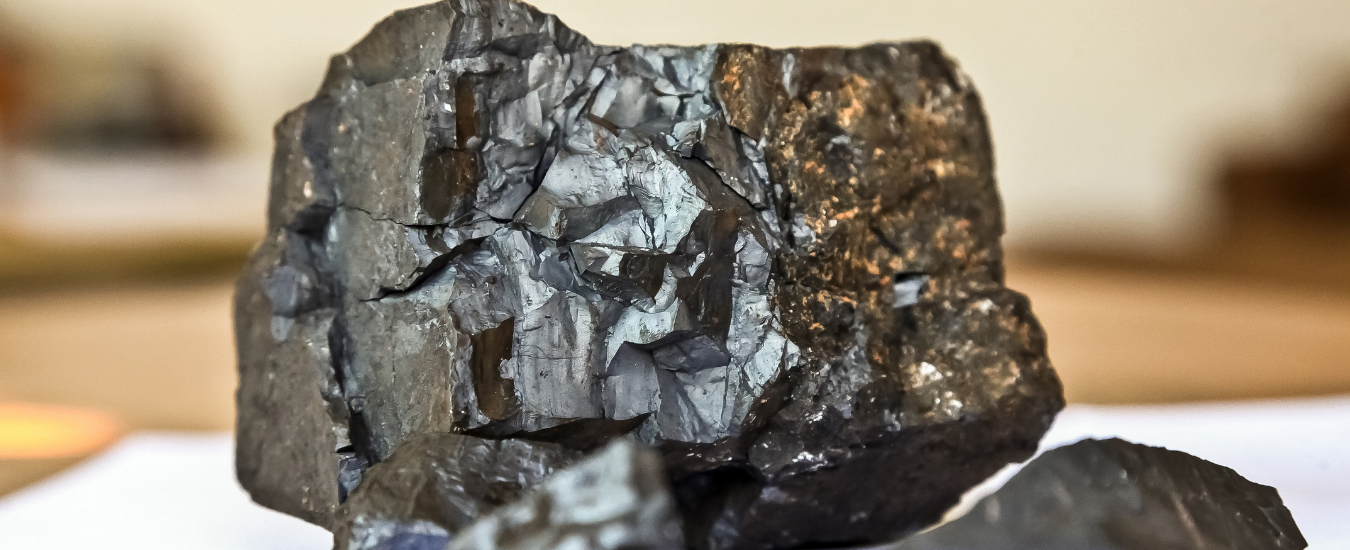
Namibian Iron Ore Deposits

Minrom Consulting was contracted to produce an independent Competent Persons Report (CPR) for a prominent iron ore project in Namibia.
READ MORE
Maganese Mine

Northern Cape Manganese Mine

Minrom Consulting was contracted by a manganese mine in the Northern Cape to scope,  plan and execute a Mine Works Programme. Geologically, the project is ...

READ MORE

How to Choose a Mineral Resource Consulting Firm for an African Project

Selecting a technical consultant for an African mineral project is a risk-management decision, not a procurement exercise. Six questions separate firms that will produce defensible work from firms that will produce a document.

Has the firm worked in this jurisdiction, or only in this commodity?

Commodity experience transfers reasonably well. Jurisdictional experience does not. Permitting pathways, licence conditions, labour and logistics realities, and data availability differ sharply between countries. Ask which countries the firm has completed projects in and identify who from the proposed team was physically present.

Which reporting standards can the firm actually sign off under?

“Familiar with JORC” is not the same as having a Competent Person or Qualified Person on staff who will take personal responsibility for the statement. Ask who the signing QP or CP will be, what their registration is, and what they have signed off previously.

Is the work multi-disciplinary, or will you be coordinating sub-consultants?

Resource estimation that ignores metallurgical variability, mine planning that ignores hydrogeological constraints, and grade control that never reconciles back to the block model are all preventable failures. They most often occur when disciplines are contracted separately and no one owns the interfaces.

How does the firm handle QA/QC and data governance?

Ask to see a QA/QC protocol from a live project. Standards, blanks, duplicates, laboratory performance monitoring, and a documented database audit trail should be routine, not an add-on. If a firm cannot describe its data governance in detail, its estimates cannot be independently validated.

Is the firm independent of the parties whose numbers it is reviewing?

For due diligence, independent technical review, and investor-facing reporting, the value of the opinion depends entirely on the independence behind it. Confirm there is no ownership, financing, or advisory relationship with the asset owner or the financier.

Can the firm explain its findings to your board as clearly as to your site team?

Technical work that cannot be communicated does not get acted on. The test is simple: ask the firm to explain a resource classification decision in plain language. If they cannot, the same limitation will apply when your investment committee asks.

Minrom's Related Services

Minrom works across the full mineral project lifecycle. Most engagements start with exploration and resource modelling.

New to the lifecycle framework? See The 7 Stages of a Mining Project.

Mineral exploration services

Exploration Service

MINROM delivers mineral exploration services including target generation, field mapping, drilling support and resource development.
READ MORE
gold-piece

Strategy Services

MINROM provides mining strategy services, helping clients evaluate opportunities, manage risk and plan successful resource projects.
READ MORE
Model 1

Modelling and GIS Services

MINROM provides GIS and geological modelling services, delivering spatial analysis, 3D models and data-driven project insights.

READ MORE
Mining geology services

Mining Geology Services

MINROM provides mining geology services including resource modelling, grade control, mine planning support and geological consulting.

READ MORE
hydrology

Hydrogeology Services

MINROM provides hydrogeology services including groundwater exploration, borehole siting, aquifer studies and water management.
READ MORE
Geology training services

Geology Training Services

MINROM offers geology training services, equipping professionals and graduates with practical skills for mining and exploration.
READ MORE

Frequently Asked Questions

Six criteria matter most: demonstrated experience in the specific country, not just the commodity; a Qualified Person or Competent Person on staff who will personally sign off under your reporting standard; multi-disciplinary capability so that geology, engineering, hydrogeology and metallurgy interface correctly; documented QAQC and database governance that allows independent validation; genuine independence from the asset owner and financier; and the ability to communicate technical findings clearly to both a board and a site team.

S-K 1300 is the SEC's mineral property disclosure regime for US registrants, requiring a Technical Report Summary prepared by a Qualified Person. NI 43-101 is the Canadian equivalent for TSX and TSX-V issuers and also uses a Qualified Person. JORC 2012 applies to ASX-listed companies and uses a Competent Person. SAMREC applies in South Africa. The underlying geological and estimation work is largely common across all four; the definitions, disclosure thresholds, report formats, and sign-off requirements differ, and a report prepared for one regime cannot simply be relabelled for another.

Not directly. While the technical basis is broadly comparable, a Technical Report Summary under S-K 1300 has its own format, content, and Qualified Person requirements. In practice, the underlying geological model, database and estimation work can usually be carried across, with the report reconstructed to meet the applicable regime. Structuring the work to anticipate multiple regimes from the outset is significantly cheaper than converting later.

Gold, copper, copper-cobalt, platinum group metals, manganese, graphite, coal, industrial minerals, and critical minerals. Estimation methods are selected to match the grade distribution and deposit geometry of each commodity rather than applied uniformly.

Resource estimation itself is method-driven and largely jurisdiction-neutral. The Modifying Factors that convert a Mineral Resource into an Ore Reserve are not. Mining and processing costs, logistics, power and water availability, labour, permitting timelines and regulatory conditions vary substantially between African jurisdictions, and applying benchmarks drawn from North American or Australian operations produces economic assumptions that will not hold on execution.

Independent technical due diligence is a comprehensive review of a mineral project's technical work, including the geological model, resource estimate, QAQC data, mine plan, and economic assumptions. A consultant with no financial interest in the transaction conducts this review. Investors, acquirers, and lenders commission it before committing capital, and companies commission it before an IPO or capital raise. Its value depends entirely on the reviewer's independence and technical depth.

No. Minrom's project experience spans Africa, Australia and Latin America across gold, copper, copper-cobalt, platinum group metals, manganese, graphite, coal and industrial minerals. Africa is where the firm's operating depth is greatest, so this page focuses on Africa.

Scoping conversations typically happen within a few days of first contact. Delivery timelines depend on scope, data availability and reporting requirements, and are confirmed after scoping. If a client is working to a hard deadline—a board meeting, a disclosure window, or a drill programme start—that constraint is established before the engagement is accepted.

Bring us the technical question behind the decision

Whether you are preparing a disclosure, reviewing an acquisition, or planning the next exploration phase, begin with a focused technical scoping call.