


















CASE STUDY
Gold In Zambia - Minrom Unlocks the Potential
Scope of Work
Overview
- A geological exploration project conducted by Minrom to assess the gold potential of two specific sites in Zambia.
- Minrom’s exploration team employed methods such as surface mapping and trenching to assess the horizontal extent and mineral grade of alluvium and sedimentary deposits.
- Our findings officially confirmed the existence of alluvial gold within the project area, specifically associated with gravel units and quartz clasts. Despite these positive results, it was concluded that additional exploration is necessary to fully understand the deposit.
Commodity
Gold
Country
Zambia
Project Type
Non-invasive Exploration

Minrom was requested by a gold-producing company in Zambia to conduct geological exploration programmes at two separate sites. The aim was to review and comment on the gold potential of the respective licences. Minrom has performed numerous gold investigations in eastern and central Africa and has one of the best gold data sets in the area.
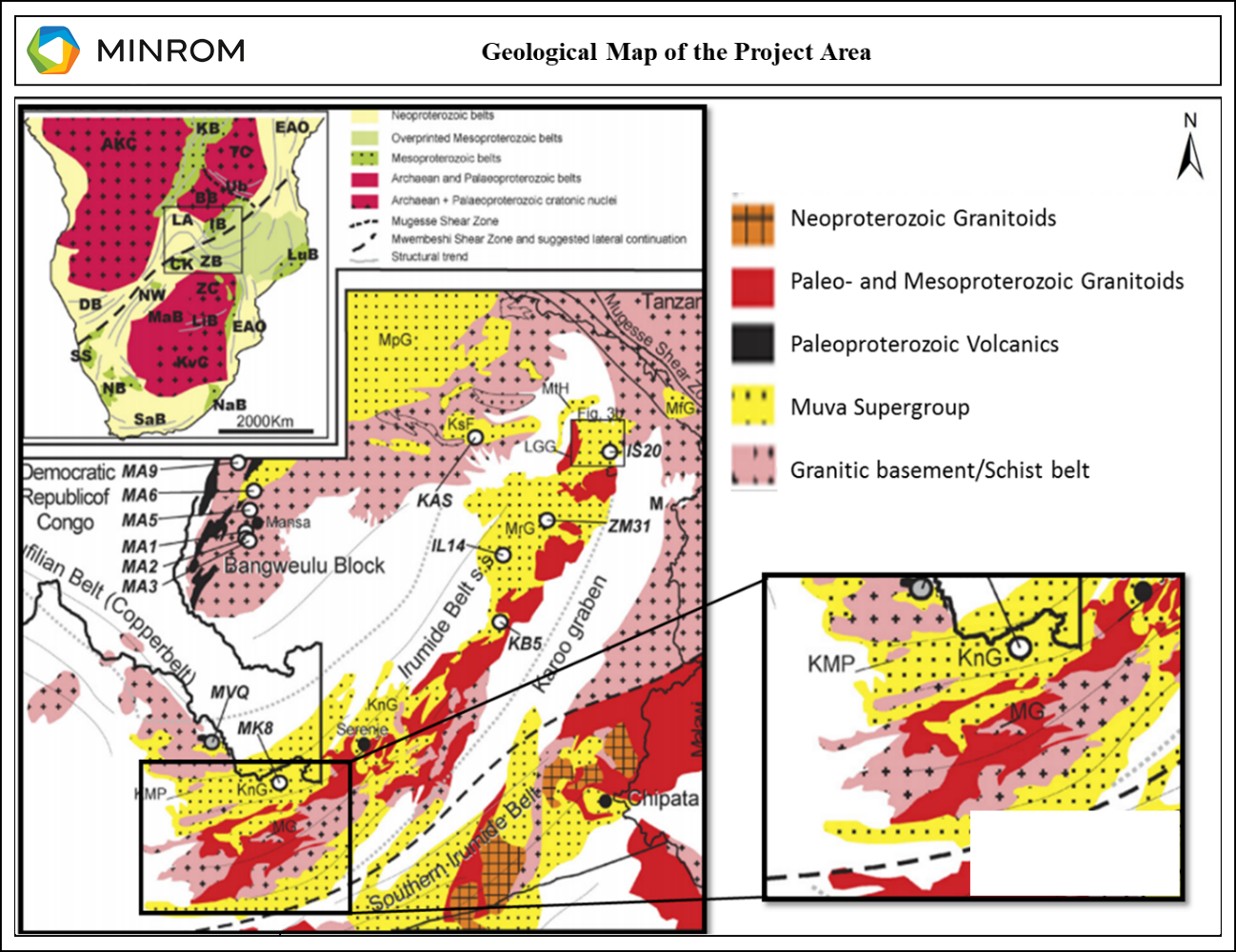
Zambia is geologically comprised of several individual cratonic terrains, including stable cratons, Pan-African mobile belts, sedimentary successions, and post-Karoo sedimentary cover. The geology of the central province of Zambia hosts predominantly three supracrustal successions, these include the Muva Supergroup, Katanga Supergroup, and the Karoo Supergroup.
The project area is located within the Quaternary sedimentary succession of alluvium, colluvium, and laterite surrounding a major river in the southern portion of the central province of Zambia. The alluvium, colluvium and lateritic unit is comprised of predominantly clay and silt with sedimentary gravel units located at the base of the sequence
Regional Geology
As part of the exploration program, Minrom conducted surface mapping, trenching, and sampling. The areas were traversed to determine the deposit’s horizontal extent, the lithological units, and the structures present. Sampling locations were also selected to determine the grade variation throughout the area.
It has been confirmed that the current project area contains an alluvial gold deposit. Minrom recommended that further exploration will be required.
Figure 1
Geology of the project area
Minrom was requested by a gold-producing company in Zambia to conduct geological exploration programmes at two separate sites. The aim was to review and comment on the gold potential of the respective licences. Minrom has performed numerous gold investigations in eastern and central Africa and has one of the best gold data sets in the area.
Zambia is geologically comprised of several individual cratonic terrains, including stable cratons, Pan-African mobile belts, sedimentary successions, and post-Karoo sedimentary cover. The geology of the central province of Zambia hosts predominantly three supracrustal successions, these include the Muva Supergroup, Katanga Supergroup, and the Karoo Supergroup.
The project area is located within the Quaternary sedimentary succession of alluvium, colluvium, and laterite surrounding a major river in the southern portion of the central province of Zambia. The alluvium, colluvium and lateritic unit is comprised of predominantly clay and silt with sedimentary gravel units located at the base of the sequence
Regional Geology
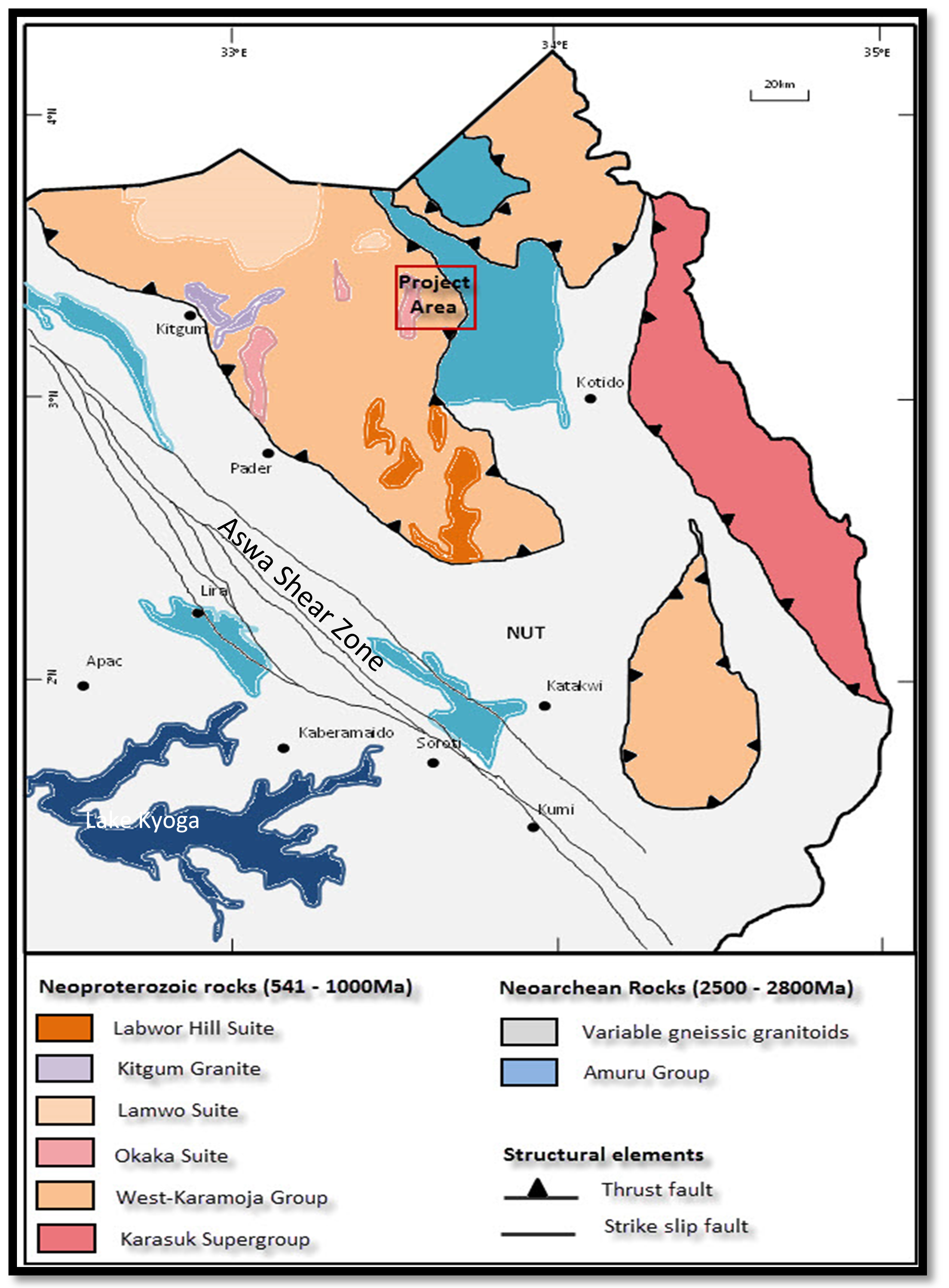
Figure 1
Regional geology of the project area
As part of the exploration program, Minrom conducted surface mapping, trenching, and sampling. The areas were traversed to determine the deposit’s horizontal extent, the lithological units, and the structures present. Sampling locations were also selected to determine the grade variation throughout the area.
It has been confirmed that the current project area contains an alluvial gold deposit. Minrom recommended that further exploration will be required.