

















CASE STUDY
Copper-cobalt in the DRC-Zambia Copperbelt: geological due diligence project case study
Minrom Consulting completed geological due diligence on a copper-cobalt project in the DRC-Zambia Copperbelt. The assessment combined historical exploration data, client drillhole data, mineralization review, and 3D geological modelling to evaluate the project’s mineral potential and guide the next stages of drilling, resource estimation, mine design, and development planning.
Scope of Work
Overview
- Minrom completed geological due diligence on a copper-cobalt project in the DRC-Zambia Copperbelt.
- The review combined historical exploration data, client drillhole data, and a new 3D geological model.
- Minrom identified 12 mega-breccia blocks with lithological units known to host copper-cobalt mineralization.
Commodity
Copper-Cobalt (Cu-Co)
Country
DRC and Zambia, Africa
Project Type
Due Diligence

Project Overview
Minrom Consulting was contracted by a client with prospecting exploration claims on copper and cobalt deposits in the Democratic Republic of the Congo (DRC).
The purpose of the due diligence assessment was to review the project’s geological setting, assess available exploration data, build a geological model from the client’s drillhole data, and provide technical recommendations for future project development.
The project is located in the African Copperbelt, also known as the Lufilian Arc, which extends from southeastern DRC into northern Zambia. The region is one of Africa’s most important copper-cobalt mining districts.
Geological setting of the copper-cobalt project
The African Copper Belt, also known as the Lufilian Arc, stretches from the south-eastern part of the DRC into northern Zambia. The copper mineralisation is hosted within the Neoproterozoic Katangan succession deposited within an evaporative basin between the Congo and Kalahari Basin.
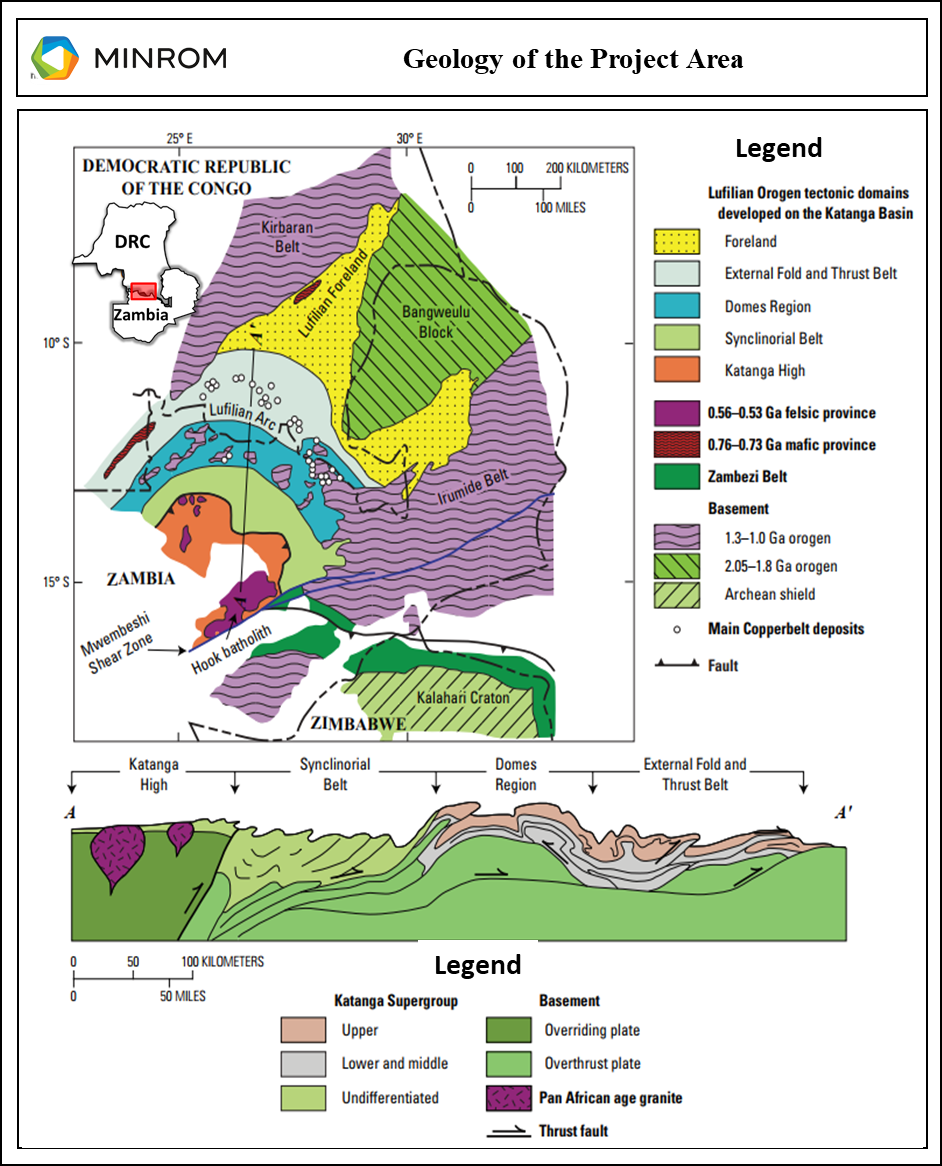
The Cu-Co critical minerals ore mineralisation occurs within the Katanga Copper Belt is hosted within the Mines Subgroup of the Katanga Supergroup. The local geological features associated with the project area is a series of northwest – southeast trending fold and thrust systems of the Kundelungu, Nguba and Roan Group sediments.
The structural deformation along with the mineralogical composition of the Roan Group resulted in the formation of Roan Breccia. This Roan breccia occurs in the Democratic Republic of Congo as:
(1) regional detachments of anticlines, synclines, over thrusted anticline flanks;
(2) local detachments within klippen;
(3) discordant diapiric intrusions; and
(4) oblique, strike-slip fault zones. The Roan breccia matrix can generally be described as grey to lilac in colour with occasional sulphide or hematite mineralisation.
As part of the due diligence report Minrom provided an account of the exploration data and mineralisation potential estimations. Additional data relevant to the project was also included to provide an unbiased overview of the project area. Minrom also created a geological model with drillhole data obtained from the client.
The exploration activities have identified a total of twelve mega-breccia blocks consisting of lithological units of the Mines Group which is known to contain copper and cobalt mineralisation. Based on the results and interpretations, Minrom concludes that the Copper-Cobalt Project contains an economic potential in both the short and long term.
Figure 1
Geological map and cross section illustrating the major sedimentary groups and structural features.
Figure 1
Simplified geological map of the Transvaal Basin (modified from Eriksson et al., 1995).
The Cu-Co critical minerals ore mineralisation occurs within the Katanga Copper Belt is hosted within the Mines Subgroup of the Katanga Supergroup. The local geological features associated with the project area is a series of northwest – southeast trending fold and thrust systems of the Kundelungu, Nguba and Roan Group sediments.
The structural deformation along with the mineralogical composition of the Roan Group resulted in the formation of Roan Breccia. This Roan breccia occurs in the Democratic Republic of Congo as:
(1) regional detachments of anticlines, synclines, over thrusted anticline flanks;
(2) local detachments within klippen;
(3) discordant diapiric intrusions; and
(4) oblique, strike-slip fault zones. The Roan breccia matrix can generally be described as grey to lilac in colour with occasional sulphide or hematite mineralisation.
As part of the due diligence report Minrom provided an account of the exploration data and mineralisation potential estimations. Additional data relevant to the project was also included to provide an unbiased overview of the project area. Minrom also created a geological model with drillhole data obtained from the client.
The exploration activities have identified a total of twelve mega-breccia blocks consisting of lithological units of the Mines Group which is known to contain copper and cobalt mineralisation. Based on the results and interpretations, Minrom concludes that the Copper-Cobalt Project contains an economic potential in both the short and long term.
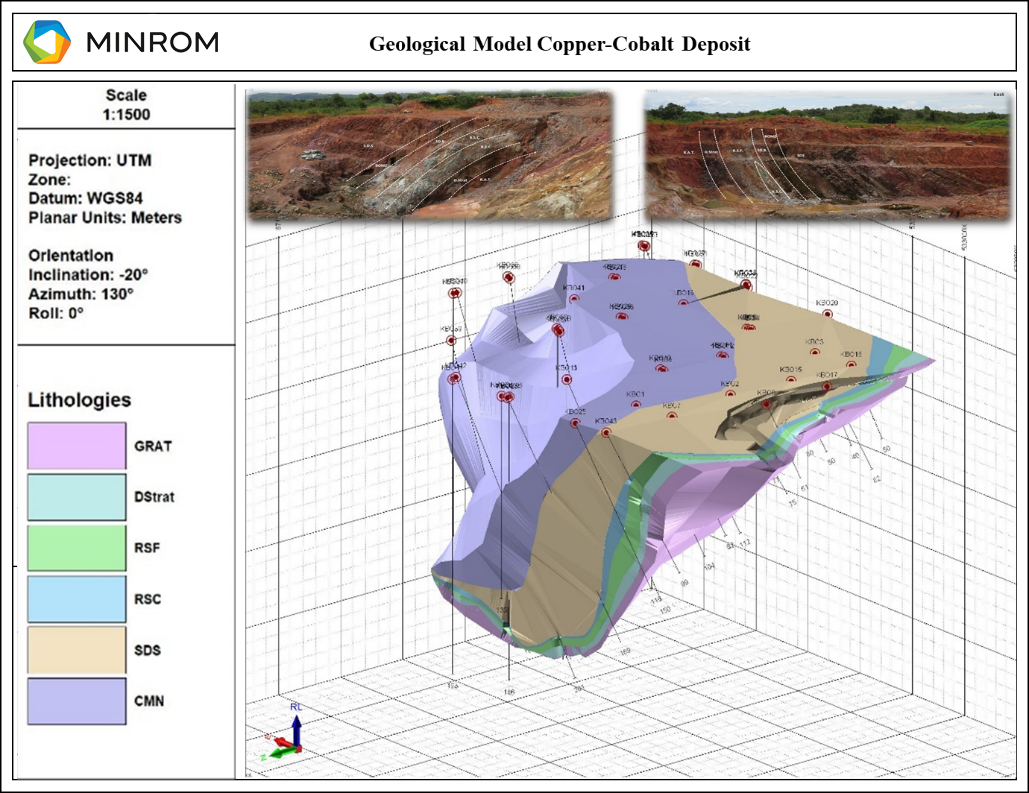
Figure 2
Logging excavated pits
The due diligence helped the client understand the project’s mineral potential, technical risks, and next steps before committing further capital.
Minrom recommended that the following be performed:
- Short Term
- Verify the project are drilling and assay data.
- Block model estimation and resource declaration.
- Develop a mine design and schedule.
- Long Term
- Exploration drilling on the remaining mega-breccia blocks.
What did the due diligence present the client with?
The due diligence helped the client understand the project’s mineral potential, technical risks, and next steps before committing further capital. Minrom recommended that the following be performed:
- Short Term
- Verify the project are drilling and assay data.
- Block model estimation and resource declaration.
- Develop a mine design and schedule.
- Long Term
- Exploration drilling on the remaining mega-breccia blocks.