






















COMMODITIES
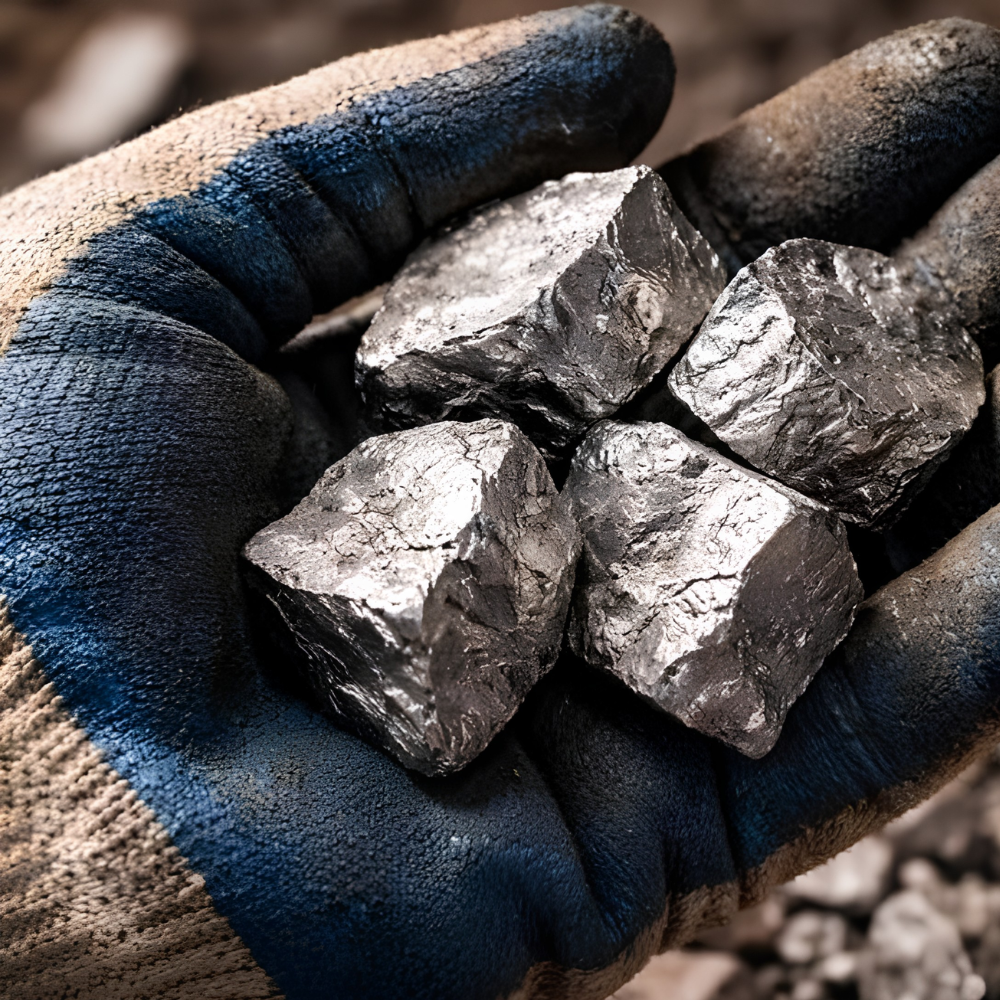
Battery Minerals
Consulting in Africa
Battery minerals projects require clear technical investigation, review, and assessment before they can progress from target review to resource work, study input, funding, or development.
Minrom assist exploration companies, mine owners, investors, and project teams in assessing battery mineral targets, planning fieldwork, reviewing geological models, estimating resources, reviewing water risk, and preparing technical reports.
Our work covers lithium, graphite, manganese, vanadium, nickel, cobalt, copper, tin, tantalum, and related battery-linked minerals across African project settings.
Why Battery Minerals Projects Need Early Technical Clarity
Battery demand has changed how many exploration teams, investors, and mining companies assess African mineral projects. Interest in lithium, graphite, manganese, vanadium, nickel, cobalt, and copper has grown, but market interest doesn’t make a project ready for the next stage.
A battery minerals project still needs to answer practical technical questions:
- What does the current data prove?
- Which target areas need more fieldwork?
- Does the geological model match the deposit style?
- Can the drilling support a resource estimate?
- Does the project have grade, mineralogy, water, or processing risks?
- What work should happen before more capital is committed?
Minrom helps clients answer these questions through geological and technical work that fits the project stage.
Critical Minerals Minrom Supports
Critical minerals vary by country, policy, supply risk, and industrial use. In Africa, many of these minerals are linked to energy storage, electric vehicles, renewable energy, manufacturing, infrastructure, defence, and industrial supply chains.
Minrom supports a range of critical minerals and related commodities, including:
Battery Minerals Minrom Supports
Battery minerals sit across different deposit types, regions, and commodity groups. Each mineral needs its own exploration and modelling approach, so Minrom’s work starts with the geology rather than the market label.
Minrom supports projects involving:
Lithium
Lithium projects in Africa are commonly linked to hard-rock pegmatites. These projects need careful mapping, sampling, drilling, mineral identification, and resource modelling to assess grade, continuity, and scale.
Graphite
Graphite projects need more than carbon grade. Flake size, mineralogy, sampling method, density, and metallurgical response can affect how the project is assessed.
Manganese and vanadium
Manganese and vanadium projects need geological models that account for, grade changes, ore types, and links to future processing.
Nickel, cobalt, and copper
These projects often need careful domain modelling, especially where oxide, transition, and sulphide zones behave differently during processing.
Tin, tantalum, and related pegmatite minerals
Pegmatite systems can host more than one mineral of interest. Minrom helps project teams assess these systems through mapping, sampling, drilling, and data review.
Exploration support for battery minerals projects
Early-stage battery minerals projects often start with mixed information from historic reports, maps, field notes, sampling, drilling, and geophysics. Before a client spends more on fieldwork, Minrom reviews the data to identify what the project already shows and what still needs to be tested.
This work can include:
- Desktop geological reviews
- Historic data review
- Target generation
- Field mapping plans
- Sampling plans
- Drill programme design
- Exploration budget input
- Data-gap reviews
- Drill supervision and core logging
- Assay and QA/QC review
QA/QC means quality assurance and quality control. In exploration, it refers to checks used to test whether sampling and assay data can be trusted.
Geological Modelling and Resource Estimation
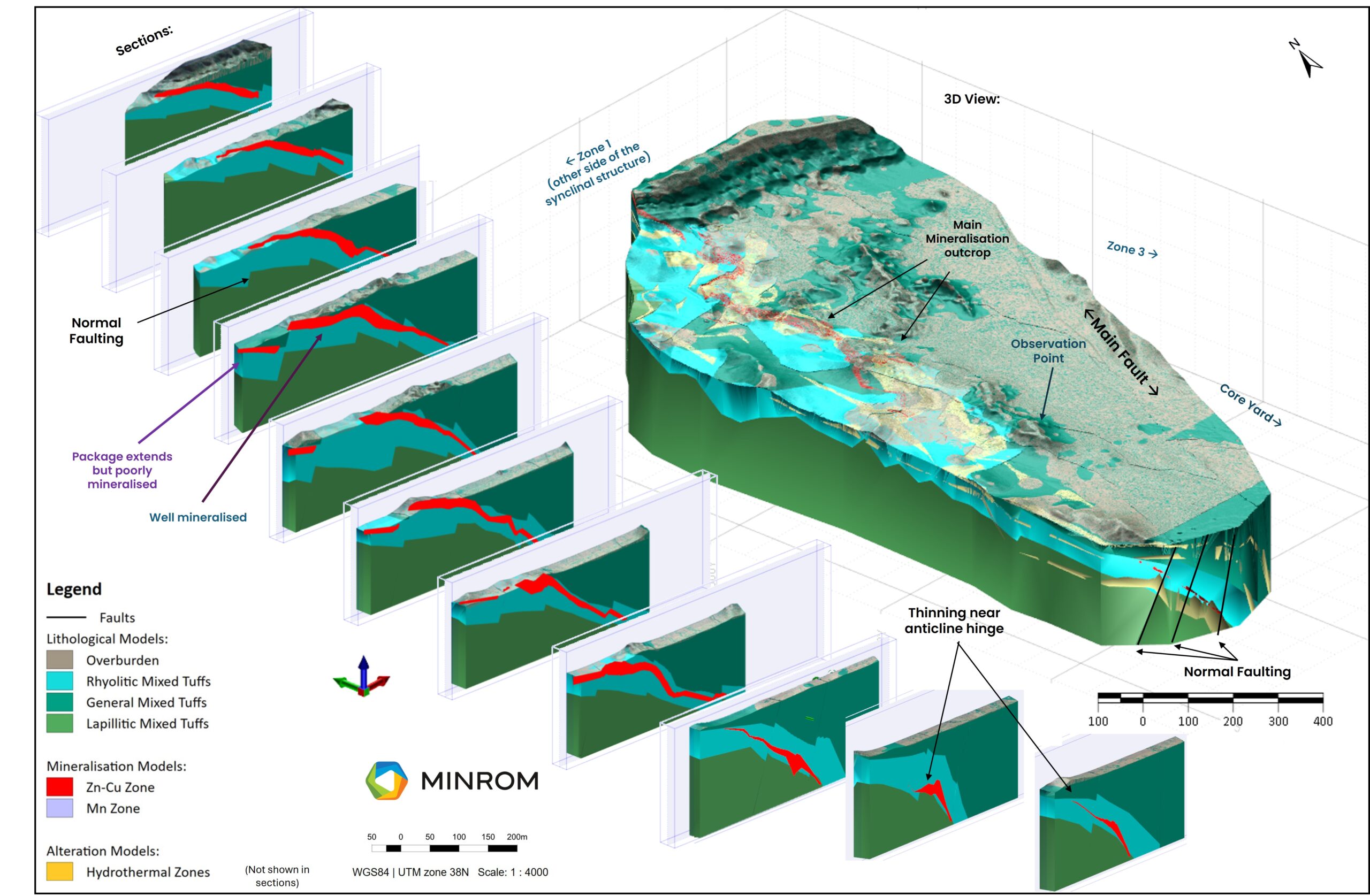
Once a project has enough reliable data, geological modelling helps define the shape, controls, and continuity of the mineralised zones.
Minrom builds 3D geological models to help project teams determine how the deposit is interpreted below surface. These models can support drill planning, resource estimation, study work, and investor communication.
For resource estimation, Minrom can support:
- Data validation
- Geological domaining
- Statistical review
- Block modelling
- Grade estimation
- Resource classification
- Competent Person review, where required
- Reporting aligned with recognised codes, such as JORC or SAMREC, where applicable
This work helps clients assess how much confidence they can place in the data and what level of reporting the project can support.
Geometallurgical Input for Battery Minerals
Battery minerals projects can carry processing questions from an early stage. Grade matters, but it doesn’t show the full project picture.
Geometallurgy links geology with metallurgical behaviour. In simple terms, it helps project teams understand how different ore types may respond during processing.
Minrom’s geometallurgical work can help clients assess:
- Ore-type differences
- Mineralogy changes across the deposit
- Sample selection for test work
- Flake size or mineral quality, where needed
- Recovery potential
- Processing risk
- Links between geology, grade, and product quality
This helps project teams assess cases where similar grades may perform differently during processing.
Hydrogeology and Water-Related Project Risk
Water can affect exploration, drilling, mine planning, processing, permitting, and future operations. For battery minerals projects, water also matters where processing routes, site access, dewatering, or environmental work need early technical input.
Minrom supports hydrogeological work where clients need to assess:
- Groundwater conditions
- Water supply
- Dewatering needs
- Water-related project risk
- Links between geology and groundwater flow
- Inputs for environmental or mining studies
This gives project teams a clearer view of water conditions before they become a planning problem.
Reporting, JORC, and SAMREC Support
Battery minerals projects that need funding, public reporting, exchange disclosure, or technical review often need reporting aligned with recognised mineral reporting codes.
Minrom can support clients with technical reports, resource estimation, data review, and Competent Person input where required.
This can include:
- Exploration Results reporting support
- Mineral Resource estimation
- Technical report preparation
- Independent project review
- Data-room support for investors or partners
- JORC or SAMREC-aligned reporting, where applicable
A clean database, sound sampling process, and clear QA/QC framework can reduce later rework when a project moves toward resource estimation or external review.
Technical Study and Project Review Support
As battery minerals projects move beyond early exploration, teams need technical inputs that connect geology with planning, processing, water, and project risk.
Minrom supports clients with:
- Mining geology
- Geological model updates
- Grade control planning
- Reconciliation support
- Technical study input
- Due diligence support
- Project review
- Ongoing geological support
This helps clients connect exploration work with the next stage of project planning.
How MINROM Works
MINROM follows a clear technical process so clients can see what happens at each stage:
1. Review the
data
The team reviews the available project information, including maps, reports, drilling, assays, geophysics, geochemistry, field data, and previous models.
2. Test the geological model
Minrom assesses the working geological model and checks whether the data supports the interpretation.
3. Identify data gaps
The team identifies gaps that may affect confidence, such as poor spatial coverage, weak QA/QC, limited density data, unclear mineralisation controls, or missing mineralogical information.
4. Plan the next technical step
The next step may be field mapping, sampling, drilling, modelling, resource estimation, geometallurgical work, hydrogeology, or technical reporting.
5. Provide usable technical outputs
Minrom provides outputs that clients can use in project planning, investment discussions, reporting, or internal decision-making.
How MINROM Works
MINROM follows a clear technical process so clients can see what happens at each stage:
1. Review the data
The team reviews maps, reports, drilling, assays, geophysics, geochemistry, field data, previous models, and test work where available
2. Asses or validate the deposit model
Minrom assesses whether the working geological model fits the available data and the expected deposit style.
3. Identify data gaps
The team identifies gaps that may affect confidence, such as weak spatial coverage, limited QA/QC, poor density data, unclear mineralisation controls, or missing mineralogical information.
4. Plan the next technical step
The next step may be mapping, sampling, drilling, modelling, resource estimation, geometallurgical work, hydrogeology, or technical reporting.
5. Provide usable technical outputs
Minrom provides outputs that clients can use in project planning, investment discussions, reporting, technical review, or internal decision-making.
Who Minrom Works With
Minrom supports clients across the mining and minerals sector, including:
- Junior exploration companies
- Mine owners
- Project developers
- Investors
- Listed companies
- Government entities
- Mining teams reviewing project or operational risk
Each client group needs technical evidence for a different reason. Some need to test an early target. Others need to support funding, reporting, study work, acquisition review, or operational planning. Minrom assists at each stage.
Related Services
Exploration Service
Strategy Services
Modelling and GIS Services
Mining Geology Services
Hydrogeology Services
Geology Training Services
Frequently Asked Questions
Battery minerals are minerals and metals used in rechargeable batteries, energy storage systems, electric vehicles, and related supply chains. Common examples include lithium, graphite, manganese, vanadium, nickel, cobalt, and copper.
Minrom supports projects involving lithium, graphite, manganese, vanadium, nickel, cobalt, copper, tin, tantalum, and related battery-linked minerals.
No. Minrom supports projects from early desktop review and exploration planning through to geological modelling, resource estimation, hydrogeology, geometallurgy, mining geology, technical studies, and operational support.
Geological modelling helps show the shape, position, and continuity of mineralisation below surface. This helps project teams plan drilling, estimate resources, assess project risk, and communicate the project more clearly.
Resource estimation uses geological, drilling, sampling, assay, and density data to estimate the amount and grade of mineralised material in a project area. The estimate must match the quality and spacing of the available data.
For many battery minerals, value depends on mineralogy and processing response, not grade alone. Geometallurgical input helps project teams link geology with recovery, product quality, and processing risk.
A project may need JORC or SAMREC reporting when it moves toward public disclosure, exchange reporting, resource estimation, funding, due diligence, or external technical review.
Frequently Asked Questions
Critical minerals are minerals and metals that countries identify as economically or strategically important. The list can change by country, market use, supply risk, and policy goals.
Minrom supports projects involving platinum group metals, manganese, vanadium, lithium, graphite, nickel, cobalt, copper, rare earth elements, titanium, fluorspar, zirconium, and selected industrial minerals.
No. Minrom supports projects from early desktop review and exploration planning through to geological modelling, resource estimation, hydrogeology, mining geology, technical studies, and operational support.
Geological modelling helps show the shape, position, and continuity of mineralisation below surface. This helps project teams plan drilling, estimate resources, review risk, and communicate the project more clearly.
Geometallurgical modelling is the integration of geological, mineralogical, and metallurgical data into a spatial model that predicts how ore will behave during processing across different domains of the deposit. It enables mine planners to anticipate variability in recovery, throughput, and reagent consumption and to schedule ore types that optimise plant performance and project economics.
Resource estimation uses geological, drilling, sampling, assay, and density data to estimate the amount and grade of mineralised material in a project area. The estimate must match the quality and spacing of the available data.
For many critical minerals, value depends on mineralogy and processing response, not grade alone. Geometallurgical input helps project teams link geology with recovery, product quality, and processing risk.